❋
Your psyche has a structure the way your body has a structure.
How we knowAt the intersection of neuroscience, physiology, and ancient wisdom traditions, a clearer picture of the human system begins to emerge.
01.Your body interprets the world before your mind does.
Before language, the body already knows.
A tightening in the chest. Deep fatigue. The instinct to leave a conversation.
Long before conscious thought, the nervous system is interpreting the world through sensation.
Neuroscientist Antonio Damasio calls these somatic markers. Bodily signals that shape perception, decision-making, and emotion in real time.
Interoception:9:00 – 9:30am
Group Activity11:00am
Lunch Break12:30pm
Creative Workshop2:00pm
Dinner6:30pm
02.Stress changes perception.
Stress does not only affect how we feel. It affects what we notice, what we fear, and what we believe is possible.
Under prolonged stress, the nervous system shifts into protection.
Attention narrows. The body prepares for threat. Curiosity, creativity, and connection become harder to access.
What feels like overthinking, emotional numbness, irritability, or self-sabotage is often a nervous system adapting to prolonged survival states.
Research in neuroscience and psychophysiology shows that chronic stress reshapes perception, behavior, memory, and emotional regulation over time.
Check-In9:00 – 9:30am
Group Activity11:00am
Lunch Break12:30pm
Creative Workshop2:00pm
Dinner6:30pm
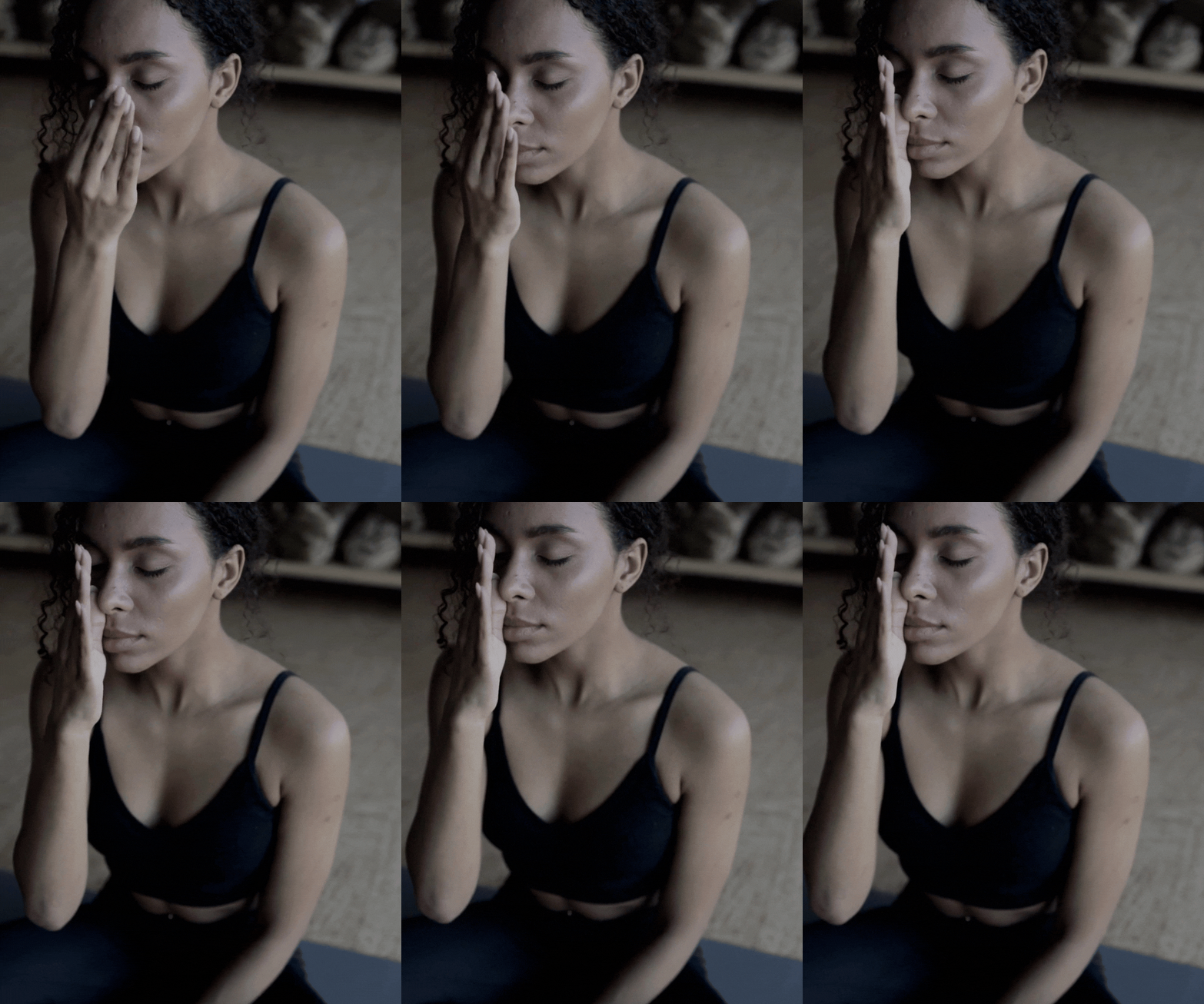
03.The self is not one thing.
Most people experience themselves as a single identity.
But across psychology, contemplative traditions, and spiritual teachings, we find a recurring idea: the human self is not singular.
Different versions of us emerge in different conditions.
Most people move through life thinking every thought, reaction, or emotion reflects their whole identity.
But many behaviors are actually protective patterns learned over time.
The achiever.
The protector.
The performer.
The wounded self.
The part that longs for meaning, freedom, or connection.
Without awareness, different parts quietly shape relationships, decisions, stress responses, and the direction of a person’s life.
Interoception:9:00 – 9:30am
Group Activity11:00am
Lunch Break12:30pm
Creative Workshop2:00pm
Dinner6:30pm
04.Emotion shapes biology.
Human emotion is not only psychological. It is physiological.
Loneliness, chronic stress, grief, purpose, belonging, and emotional safety all influence the body over time.
Research in psychoneuroimmunology and affective neuroscience increasingly shows that emotional states can affect inflammation, immune function, cardiovascular health, sleep, and long-term resilience.
What we feel repeatedly does not stay confined to the mind.
The body adapts around it.
Check-In9:00 – 9:30am
Group Activity11:00am
Lunch Break12:30pm
Creative Workshop2:00pm
Dinner6:30pm
05.The nervous system can be retrained.
The brain and body are constantly adapting to repeated experience.
Patterns of stress, avoidance, emotional reactivity, and disconnection are not fixed traits. They are learned responses shaped over time.
Through neuroplasticity, the nervous system can form new patterns through repetition, attention, breath, movement, relationship, and environment.
What is practiced consistently begins to feel more familiar.
And over time, what feels familiar begins to shape identity.
Neuroplasticity:9:00 – 9:30am
Group Activity11:00am
Lunch Break12:30pm
Creative Workshop2:00pm
Dinner6:30pm
How we knowAt the intersection of neuroscience, physiology, and ancient wisdom traditions, a deeper understanding of the human system begins to emerge.
❋ Intentional StructureWe blend guided moments, open exploration, and space to reflect—so the experience feels both focused and fluid.
❋ Collaborative EnergyConnection is a core part of the process. You’ll learn just as much from the group as from the content itself.
❋ Expert FacilitationLed by experienced guides who know how to hold space, encourage participation, and keep things moving with purpose.
❋ A Supportive SpaceOur events prioritize comfort, safety, and respect—so you can show up as you are and fully engage in the process.
How It Works-
Browse our upcoming events to find the one that feels right for you. We host events year-round in all different locations and climates.
-
Sign up and pay all required fees to reserve your spot. If plans change, you can cancel up to 14 days before the retreat start to receive a 50% refund.
-
After booking, we'll send you a Welcome Packet with everything you need to know—detailed schedules, packing list recommendations, add-ons to consider, and more.
-
We'd recommend booking your transportation to and from the event as soon as possible, to ensure you can arrive without any complications or delays.
-
Now all that's left to do is pack your bags and get excited for your new adventure.